





































The story behind Kat Kerr’s silk scarves
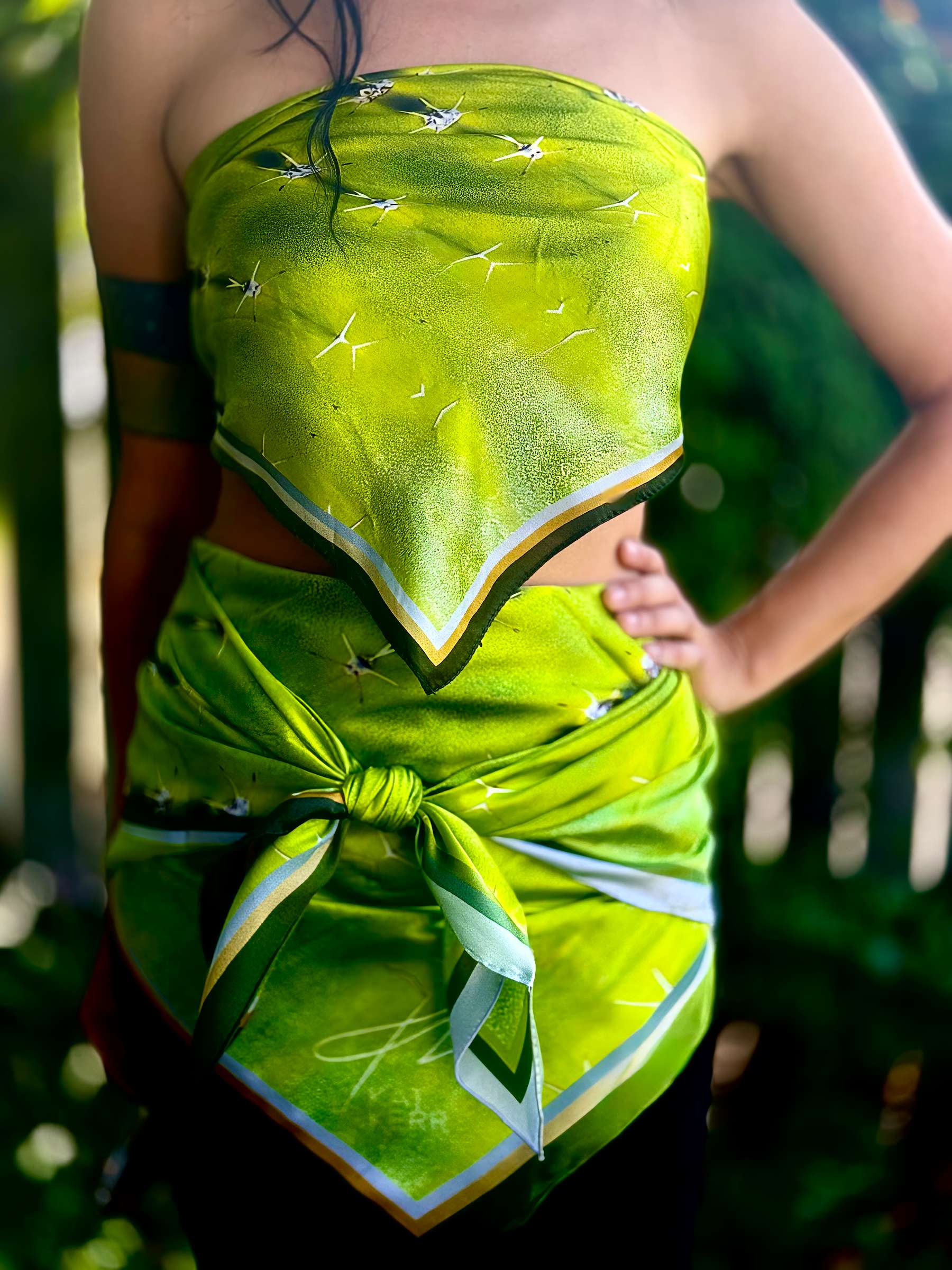
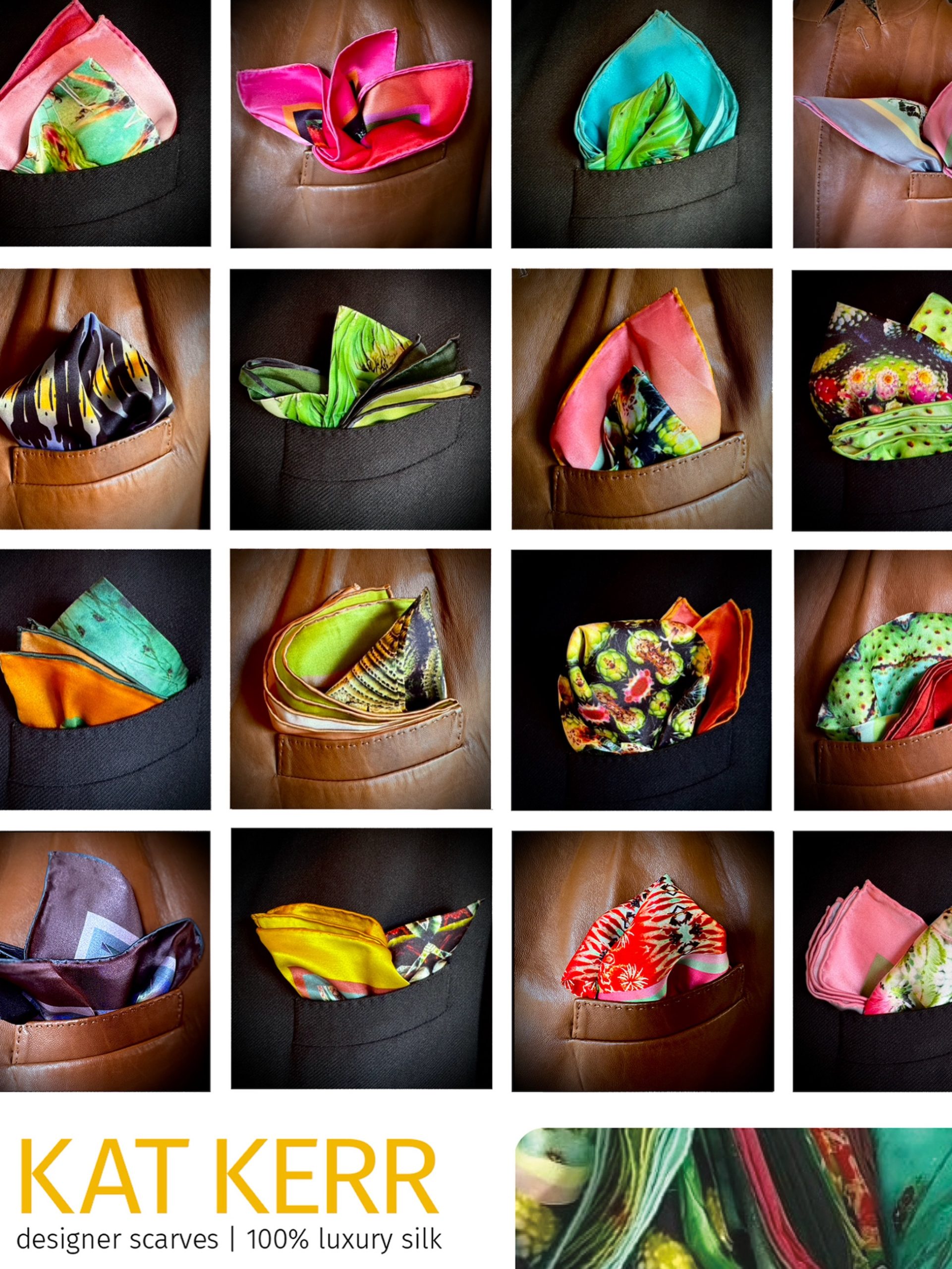
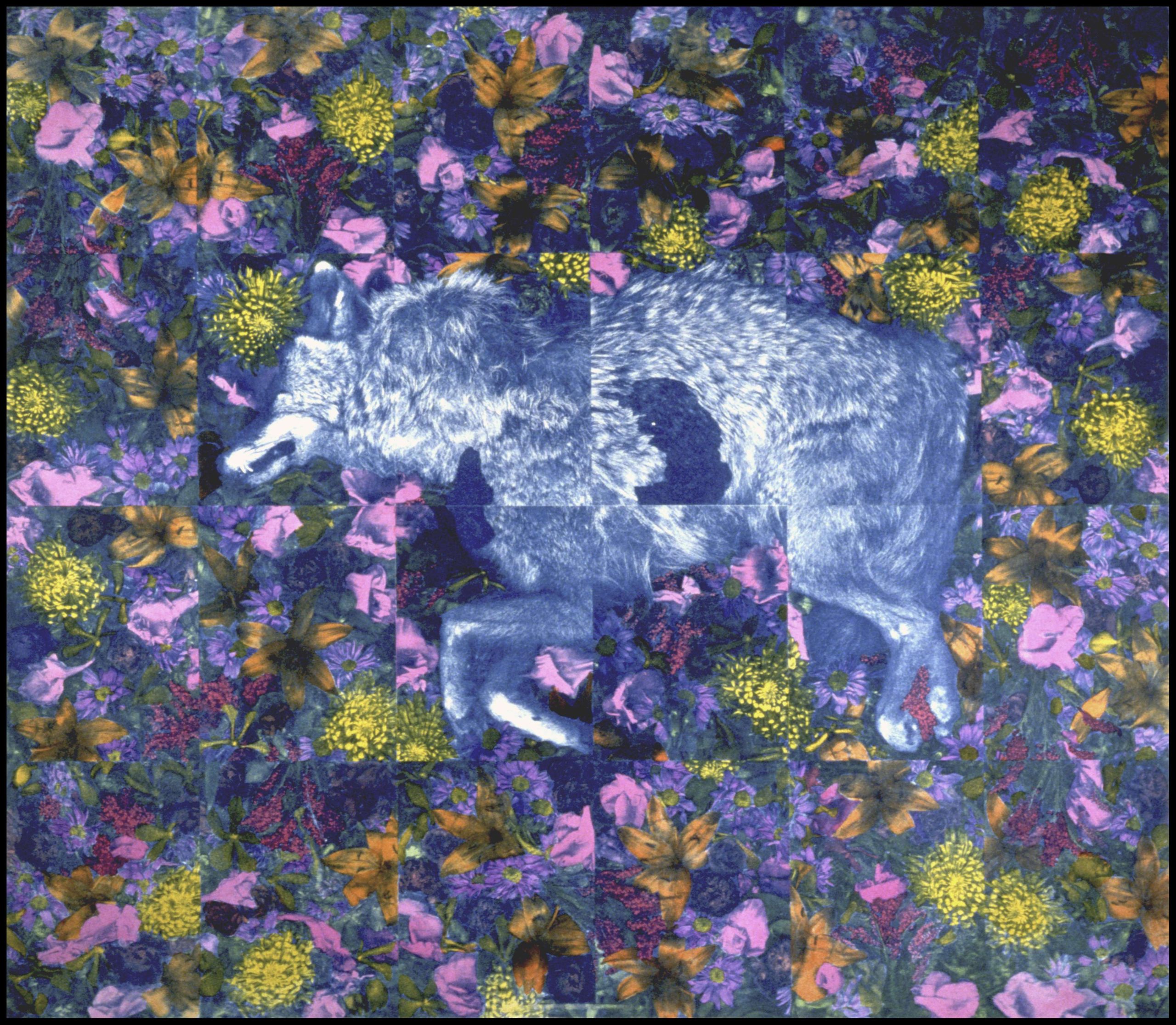
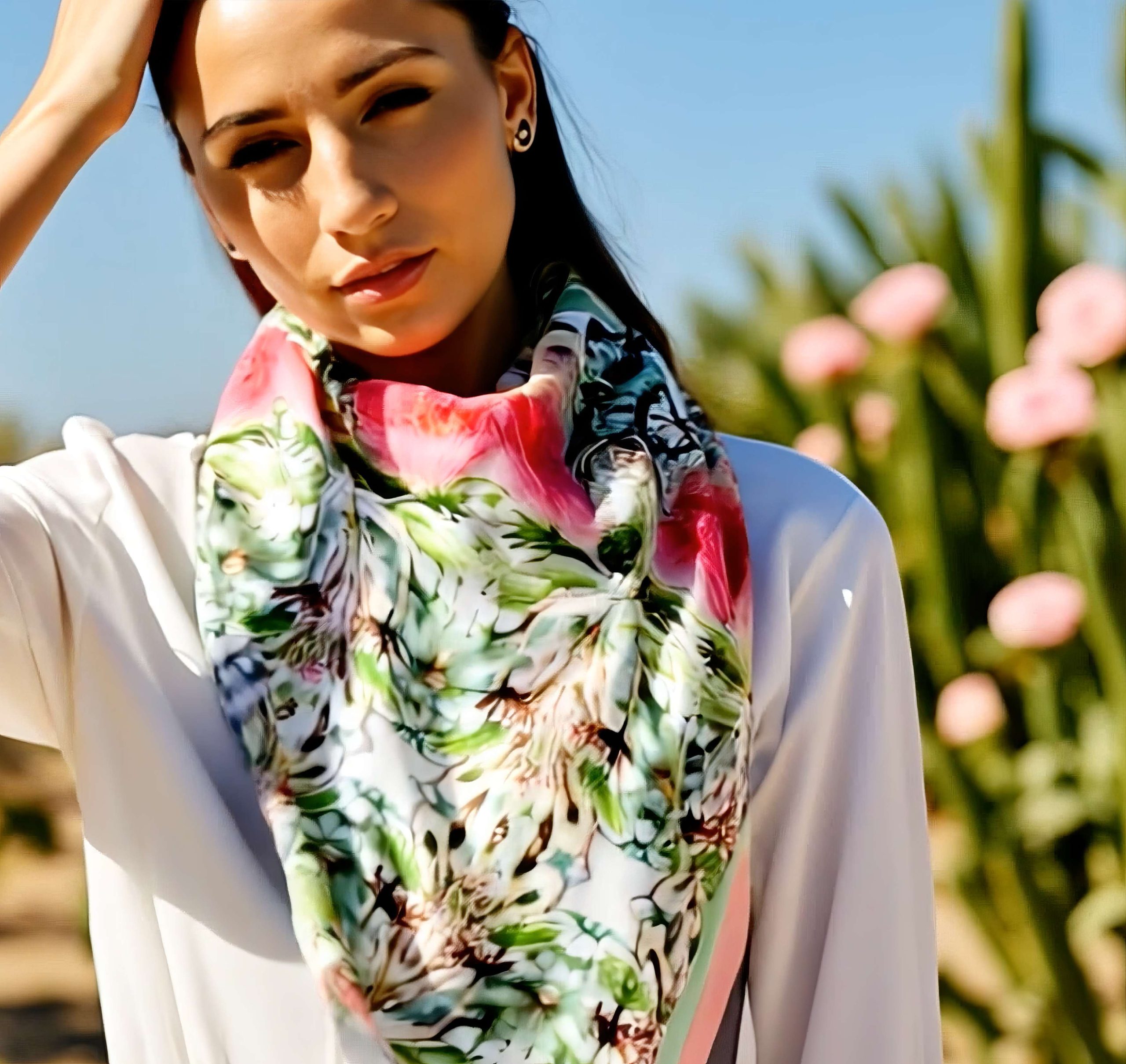
Katherine Kerr didn’t expect to find her next collection in a desert. Travelling to Phoenix, Arizona, she anticipated dry, brown landscapes — instead, she was met with blazing yellow wildflowers and towering cacti. “I was absolutely astounded by the incredible colour palette,” she says.
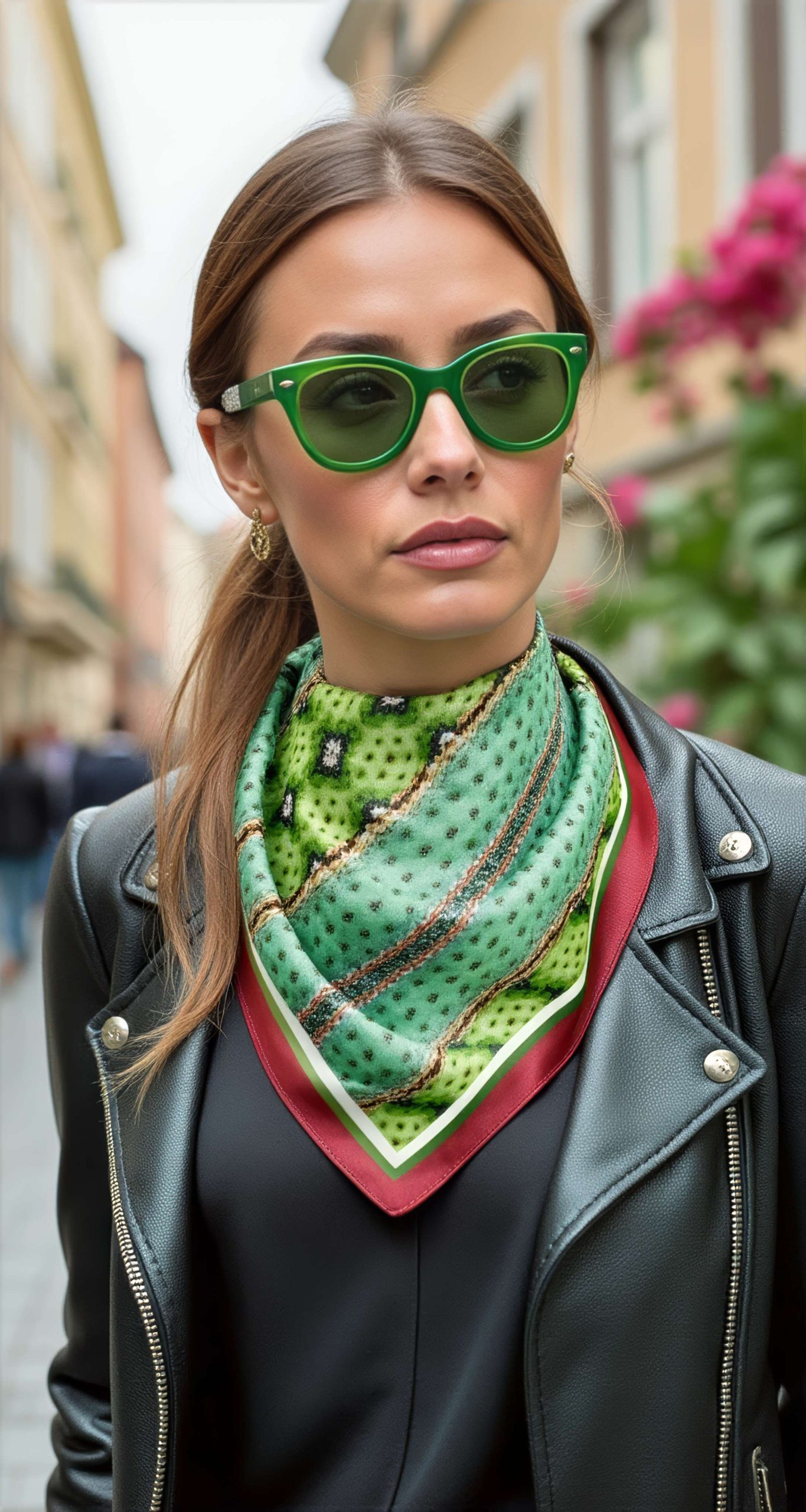
That sense of surprise and wonder sits at the heart of Kerr’s brand. After years working in art, architecture, and public arts administration, she launched Kat Kerr to create scarves that are “an homage to beauty, strength and quiet complexity” — what she calls wearable art.
The foundation was personal. Growing up, Kerr watched her mother needlepoint and work in textiles, an inheritance she carries into every design. Her process is intuitive: she works from her own drawings and photography, using her computer to transform images into geometric shapes — a nod to her architectural background.
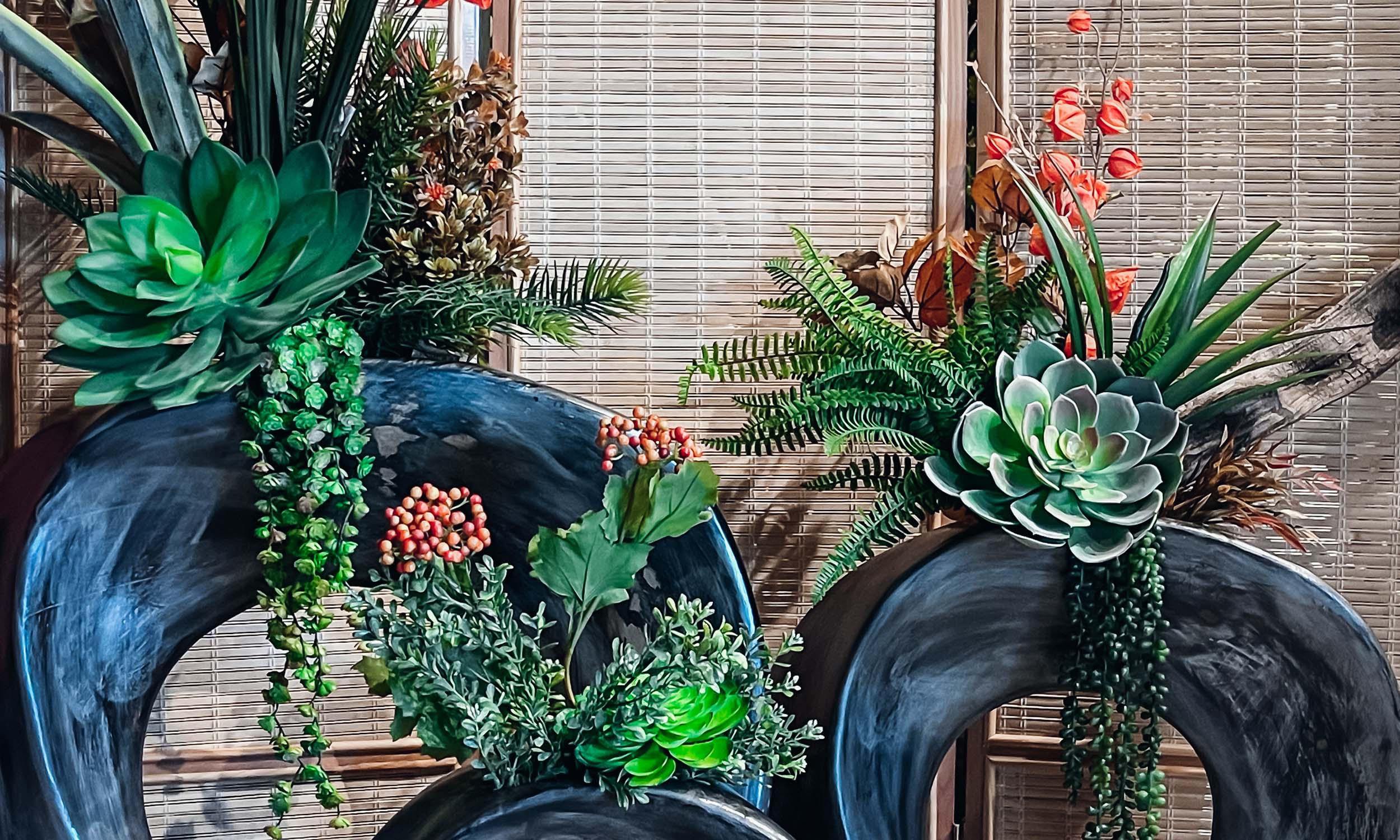
Her current collection, Desert Botanicals, draws directly from the Phoenix trip. The plants, she says, became more than a visual motif. “The cacti and the succulents themselves are really a story about the universe,” she says, speaking to how humans and the universe share similar traits of resiliency and adaptability.
For her scarves, Kerr works exclusively with mulberry silk produced by Bombyx mori silkworms, the highest quality available, deliberately chosen as a counter to fast fashion. She hopes each scarf becomes an heirloom, something that carries its wearer’s story forward. Every scarf includes a small tag describing the inspiration behind the design.
That connection between maker and wearer is something Kerr has seen take on a life of its own. One customer purchased a scarf and, months later, mailed Kerr an unexpected gift — a beaded necklace. “She told me it was inspired by that scarf,” Kerr recalls. “The colouration is gorgeous.”
Kerr’s 16-piece collection is available in four sizes. Her next goal: producing scarves from even more environmentally conscientious materials — like TENCEL™, a sustainable wood-pulp fabric that is soft, breathable, and durable across seasons. “The strength and complexity that nature holds,” she says, “is a reflection of ourselves.”
Places To Be
See this month's local flavours, products, and services.