







































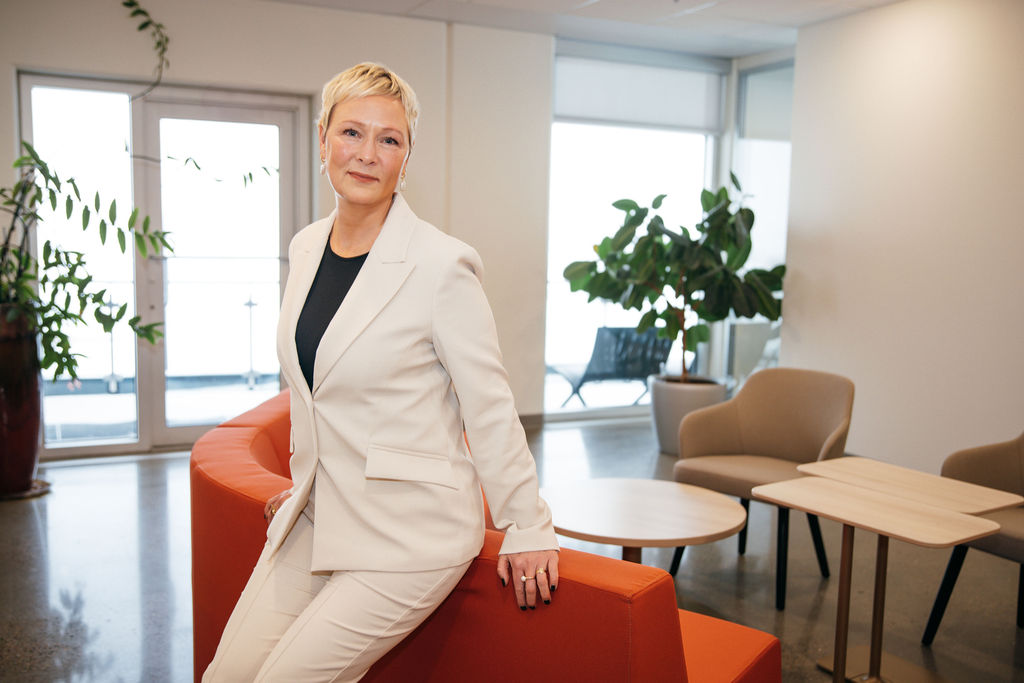











Angela Santiago is growing a unique crop through a business built on integrity
When Angela Santiago’s dad, Jacob Vanderschaaf, first asked her to be part of his latest business idea—growing small potatoes—she thought she’d help launch the company and then go elsewhere. Potatoes meant something to Vanderschaaf—he’d grown up in a family of eight on a potato farm in Friesland, a province in the Netherlands known for growing mounds upon mounds of the vegetable.
It was a good match for her dad, but Santiago doubted The Little Potato Company would hold her own interest.
Then, she saw the intricacies behind the scenes as the company grew, and developed a breeding company resulting in a unique, healthy product that solidified Santiago’s commitment to the family business.
Now, rather than seeing potatoes as big, boring and uniform, Santiago recognized their possibility—they’re as colourful, diverse and interesting as the career she’s had with the company. After 30 years as CEO, she’s excited to share her passion behind cultivating a corporate culture of kindness and a product that’s now available in more than 20,000 retail locations across North America.
Take me back to 1996 when your dad started the company. I read that he overheard two Frisian potato farmers talking about potatoes, and that sparked his interest. What happened there?
For context, Friesland is a small province in the Netherlands where they speak a different language, and probably only a [half a million] people speak it. For him to have walked into this café—and I think it was an Esso service station café on the west side of Edmonton—and overhear these Frisian growers speaking about little potatoes [in their language] was just happenstance.
He came home and was excited about this because it sparked a memory for him as a young child. And also, potatoes are very much part of the fabric of a lot of European countries: Germany, Ireland, Holland where potatoes are much more of a staple in their daily meals. I think it also sparked a cultural thing for my dad. And then, of course, his father, my grandfather, also being involved in the potato trade business—it sparked a genuine passion for him.
And then he very excitedly said: why don’t we try and do that here? Let’s try to grow small potatoes in North America and see if consumers will like it.
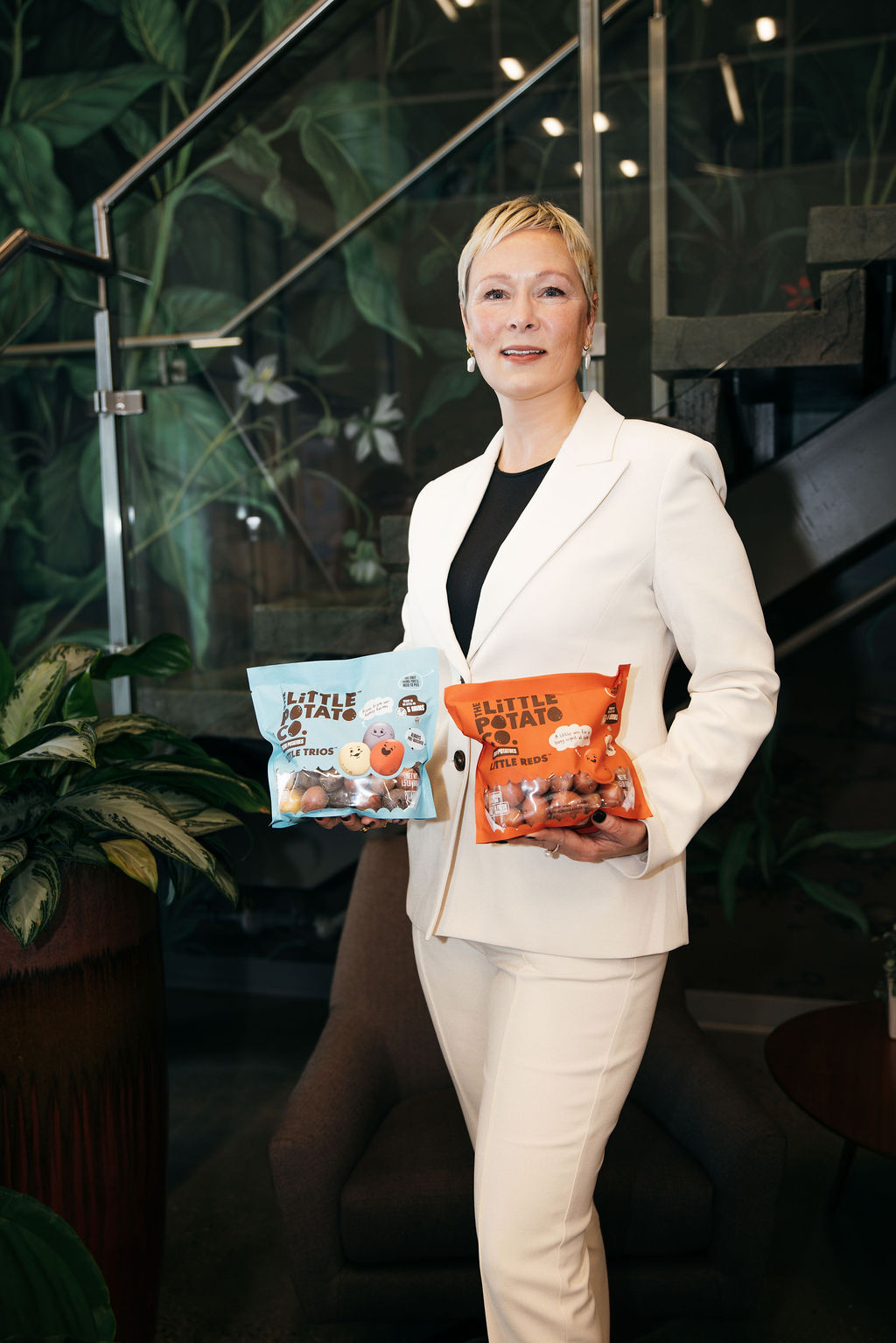
What made you decide to specifically hone in on the small potato side of things?
I think there were a few things. You could see that people were buying less and less of the big bags of big potatoes. We also noticed that they’re having smaller families. And they’re much busier outside the home than they were a couple of decades ago.
So it’s the idea of having convenience and nutrition bundled up in one. Small potatoes meet all that; they’re quick, convenient, easy to cook, and they’re nutritious, because you eat them with the skin on—a lot of the nutrients and vitamins are in the skin of a potato.
We started off in food service and some local delis, and that gave us a green light. The chefs were thrilled with it. We would sell out at farmers markets. We got our first big nod when IGA (Alberta) decided to list them
In the beginning, we used potatoes that you find in the open market. We tried to agronomically enhance them to grow small but they just weren’t genetically purposeful for small potatoes so we started a breeding company where we breed new potato varieties. It’s all natural, not GMO at all. Now we have three breeding programs—one in Canada, one in the Netherlands, and one in Chile. My brother runs that company now. We come up with new potato varieties that are small, delicious or economically better.
Your dad grew up in the Netherlands where there is a long history of potato growing. Did that history influence your business?
If you go even further back to South America, they have a potato gene bank; it holds all of the genetics of every potato that ever existed. And if you go back to the original traits of early potatoes, they were actually small, multi-coloured, with all sorts of different shapes and sizes.
The potato, in its original state, is quite diverse, with different colours—purple, orange, red, yellow, you name it—and different shapes and sizes. When the Spanish took the potato back to Europe, they didn’t take the diversity with them. They took more of the bigger potatoes because it was really about feeding [more people.]
A lot of the diversity got bred out, and that was part of the exciting piece for us—bringing back the originality of potatoes.
I find potatoes to be a very incredible and unique crop. You get more nutrients and more food out of an acre of potatoes than you would out of rice or wheat.
What about the work culture at your company? You’ve described it in the past as a culture of kindness. How are some ways that you perpetuate this culture, and why is it so important to you?
I’m not a serial entrepreneur so this company is where I devote my time; I want to go big or go home. I dedicate a lot of my life, energy and love into growing the company and ensuring the people behind it are happy.
I am a believer in the importance of lifelong learning, and want to ensure employees have access to those opportunities as well. There’s a lot of coaching and training available through the company with the senior leadership team having access to technical skills’ training. We have good health care and access to mental health services. To me, the most important part of leadership is taking care of the people.
I believe that all of our staff want to do great work. They’re honest and they care about what they do and if I can support them that way, then I know the output of that is a company that grows.
Places To Be
See this month's local flavours, products, and services.